



Quality Is Not Optional – Knitted Fabric Production According to Standards
Material quality in knitted fabric production has never been a secondary element. It is the foundation that determines the durability, aesthetics, and functionality of the finished product. From the very first stage of working with knitted fabrics, quality decides whether the material will meet the expectations of the market, the designer, and the end user. In this article, we explain why material quality in knitted fabric production is non-negotiable and what production carried out according to proper standards really looks like.
Table of Contents
- Material quality in knitted fabric production as the starting point of the entire process
- Raw material selection and material quality
- Material quality in knitted fabric production at the spinning stage
- The knitting process: its impact on the material
- Material quality in knitted fabric production and dimensional stability
- Dyeing and finishing
- Production quality control
- Material quality in knitted fabric production and modern technologies
- Types of knitted fabrics and quality requirements
- Material quality in knitted fabric production from a technical perspective – parameters
- FAQ – frequently asked questions about material quality in knitted fabric production
Material Quality in Knitted Fabric Production as the Starting Point of the Entire Process
Material quality in knitted fabric production affects every subsequent stage of work — from design and sewing to the final use of the garment. A material with stable technical parameters allows manufacturers to predict its behavior during washing, wearing, and long-term use. Low-quality knitted fabrics generate losses — complaints, returns, customer dissatisfaction, and loss of brand trust.
In professional production, there is no room for randomness. Every meter of knitted fabric should meet specific standards, and the manufacturer must control the entire process, as we emphasize as an experienced company.
Raw Material Selection and Material Quality
The first real test of quality is the raw material itself. Material quality in knitted fabric production begins with fibers — both natural and synthetic. Cotton provides breathability and comfort, wool offers thermal insulation, and polyester ensures resistance to wear.
Selecting raw materials is not only about choosing the fiber type. Equally important are uniformity, fiber length, cleanliness, and batch consistency. Even small differences can affect the appearance and properties of the finished knitted fabric.
Material Quality in Knitted Fabric Production at the Spinning Stage
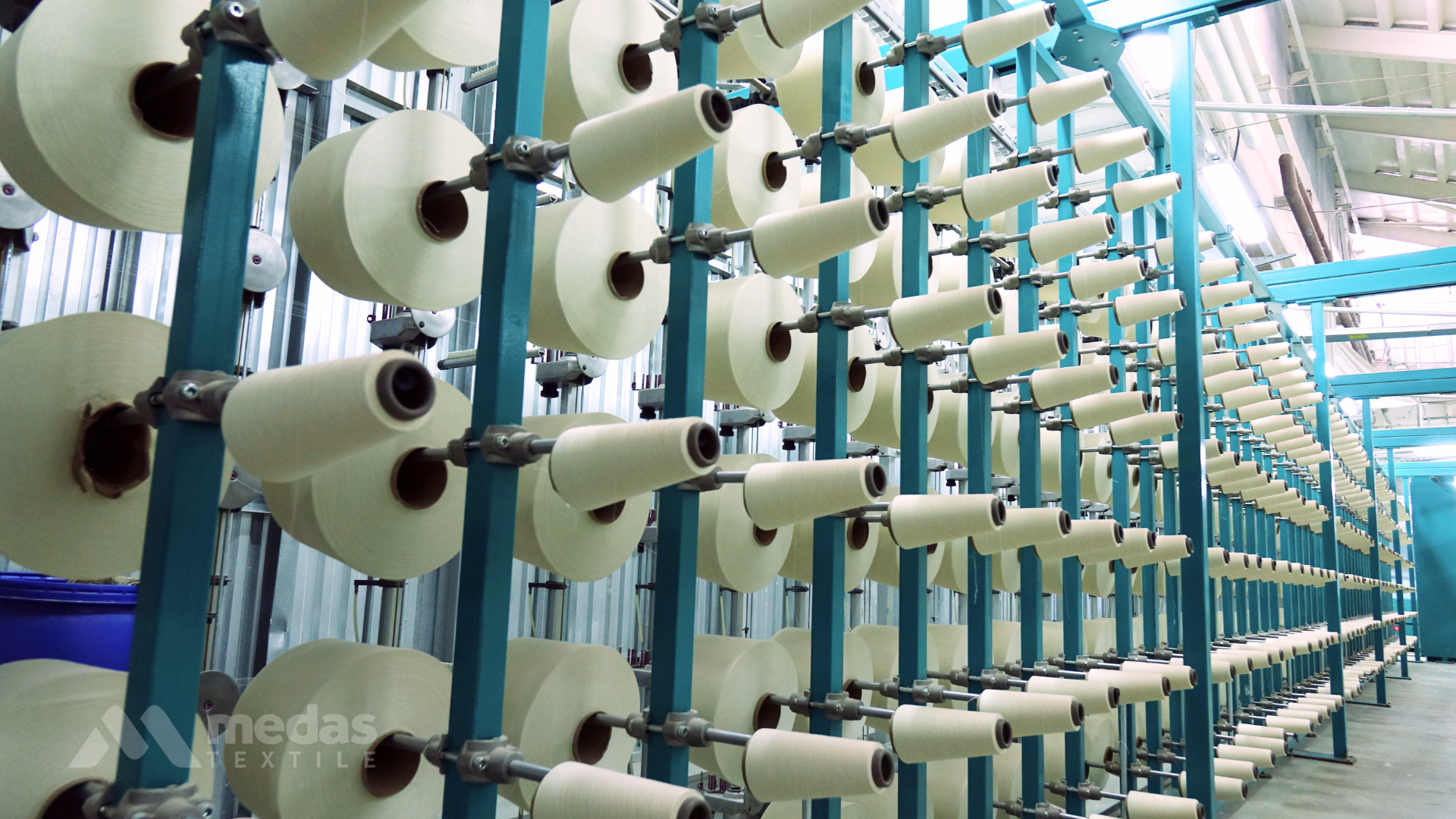
Spinning is the stage where raw material quality is transformed into functional quality. Material quality in knitted fabric production depends on even yarn twist, the absence of thick spots, and yarn stability. Errors at this stage are difficult to eliminate later.
Uneven yarn results in irregular loops, lower durability, and problems during the knitting process. That is why manufacturers invest in quality control already at the yarn stage.
The Knitting Process: Its Impact on the Material
The knitting process requires precision. Material quality in knitted fabric production depends on machine settings, yarn tension, and the technical condition of the needles. Even millimeter-level deviations can cause holes, snags, or irregular knit structures.
Modern machines enable the production of fabrics such as single jersey, heavy jersey, sweatshirt fleece, interlock, or ribbed knitted fabrics while maintaining high repeatability of parameters.
Material Quality in Knitted Fabric Production and Dimensional Stability
Dimensional stability is one of the most common functional issues. Material quality in knitted fabric production determines whether a garment will retain its shape after washing. Shrinkage and stretchability are laboratory-tested before the material reaches the cutting room.
Before sewing, it is recommended to inspect every batch of knitted fabric to avoid dimensional differences in finished products.
Dyeing and Finishing
Dyeing is the stage at which material quality in knitted fabric production is particularly vulnerable to losses. Different fibers absorb dyes differently, which requires precise selection of chemical processes.
Finishing affects the softness, elasticity, and appearance of knitted fabrics. A poorly executed finishing process can reduce the quality of even the best base material.
Production Quality Control
Quality control is not based solely on the human eye. Material quality in knitted fabric production is evaluated using durability tests, pilling tests, and resistance tests for light and washing.
Example Parameters of Knitted Fabric Quality Control
| Parameter | Importance for the User |
| Durability | resistance to tearing |
| Pilling | tendency to pill |
| Stability | maintaining dimensions |
| Color | color fastness |
Material Quality in Knitted Fabric Production and Modern Technologies
Automation and precision machinery make it possible to maintain high material quality in knitted fabric production while simultaneously increasing efficiency. Technologies reduce the number of errors and enable the production of more advanced knitted fabric structures.
Types of Knitted Fabrics and Quality Requirements
Different knitted fabrics have different quality requirements. Single jersey works well in lightweight clothing, heavy jersey in more demanding projects, and sweatshirt fleece in casual and sportswear. Interlock offers greater durability, while ribbed knitted fabrics provide elasticity and functionality.
Material Quality in Knitted Fabric Production from a Technical Perspective – Parameters
Material quality in knitted fabric production can be assessed through:
- raw material composition
- fabric weight (GSM)
- fabric roll width
- type of knit structure
- finishing method
These parameters allow manufacturers and designers to consciously select materials for specific projects.
FAQ – Frequently Asked Questions About Material Quality in Knitted Fabric Production
Why is material quality in knitted fabric production so important?
Because it affects the durability, comfort, and aesthetics of the finished garment.
How can material quality in knitted fabric production be verified?
Through analysis of technical parameters, laboratory testing, and visual inspection.
Does high material quality in knitted fabric production reduce costs?
Yes, in the long term — it reduces the number of complaints and production losses.